
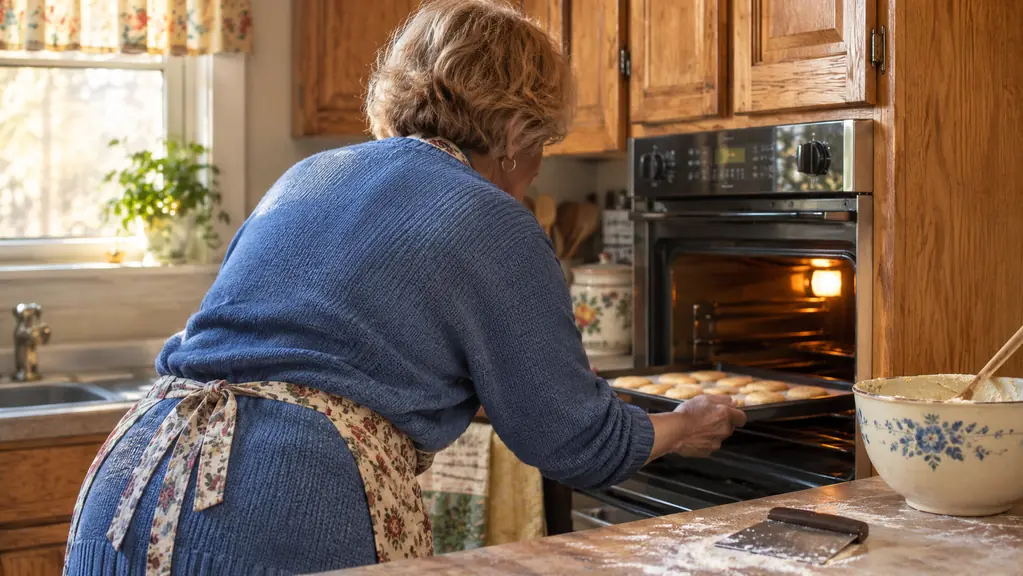
Sixteen months ago I threw away two dark nonstick cookie sheets in the same week. Both had warped enough that they rocked on the oven rack, and both had scorched the bottoms of a batch of chocolate chip cookies while the tops stayed pale. I had baked on those sheets for years and had quietly accepted the trade: soft centres, dark bases, a scrubbing job at the end. Then I bought the Nordic Ware Naturals half sheet pans, the two-pack, and the difference showed up in the very first batch.
I trained in pastry, spent seven years in a hotel pastry kitchen, and now I bake at home in a narrow galley kitchen in Baltimore with one standard 30-inch electric oven and about six feet of counter. That is the whole test lab. No second oven, no proof box, no walk-in. What I can tell you after sixteen months of near-daily use is narrower and more useful than a spec sheet: what these pans do well, what they refuse to do, and whether the two-pack earns the cabinet space over the fridge.
The Quick Verdict
The plainest pan I own and the one I reach for first. Bare aluminum browns evenly from the bottom up, the encapsulated rim has kept both pans dead flat through sixteen months of oven heat, and the only real cost is learning to bake on a surface that grabs nothing.
Amazon Check Today's Price →The pan I stopped thinking about halfway through the first batch
Two pans, 17.9 by 12.9 inches, pure aluminum with a steel rim folded into the edge. No coating to flake, no dark surface to scorch your cookie bottoms, and a lifetime limited warranty behind it. This is the pair that replaced every nonstick sheet in my cabinet.
Amazon Check Today's Price on Amazon →How I've Used It
Almost everything that goes into my oven goes in on one of these two pans. Chocolate chip cookies most weeks. A sheet cake for my sister Karen's birthday and one for my niece Maddie, who turned ten this year. Roasted nuts through the holidays. Sheet-pan chicken thighs with whatever is in the vegetable drawer, which is the weeknight dinner that keeps this kitchen running. Sugar cookie cutouts at Christmas, rolled and cut with a bench scraper and moved onto the pan. Brownies for the church bake sale, cut in the pan with the scraper and lifted out in squares.
The pans are 17.9 by 12.9 inches on the outside, 17.1 by 12.1 inches inside, with a one-inch wall. That lip matters more than the number suggests. It is tall enough to hold a batch of roasted vegetables and a slick of oil, and shallow enough that hot air moves over the food instead of trapping steam underneath it. Nothing steams in these pans unless I cover it deliberately.
They also do the jobs that have nothing to do with baking. A cooling rack sits inside the lip so cookies cool without sliding off the counter. I toast breadcrumbs, dry out stale bread for stuffing, and set a pan underneath a bubbling pie to catch the overflow. A half sheet is the most useful flat object in a kitchen and I did not fully believe that until I had two of them.
The clearest example was the Thanksgiving before last. I had a double crust apple pie in a glass dish on the lower rack and a pan of dinner rolls on the upper one, and I set the second Nordic Ware pan on the rack below the pie because that pie has always bubbled over at the edge. It did, right on schedule, and the pan caught every drop of the sugared juices instead of letting them burn onto the oven floor. Fourteen minutes later I pulled the pan out, let the syrup cool until it went tacky, and soaked it off in the sink. The oven floor needed nothing. The old thin sheet I used to use for that job would have flexed under the weight of the pie dish when I slid it in and dumped the whole thing sideways. I know because it did that once, in 2019, and I spent a Sunday afternoon scraping burnt sugar off an oven floor with a bench scraper.
Why Bare Aluminum Bakes Differently
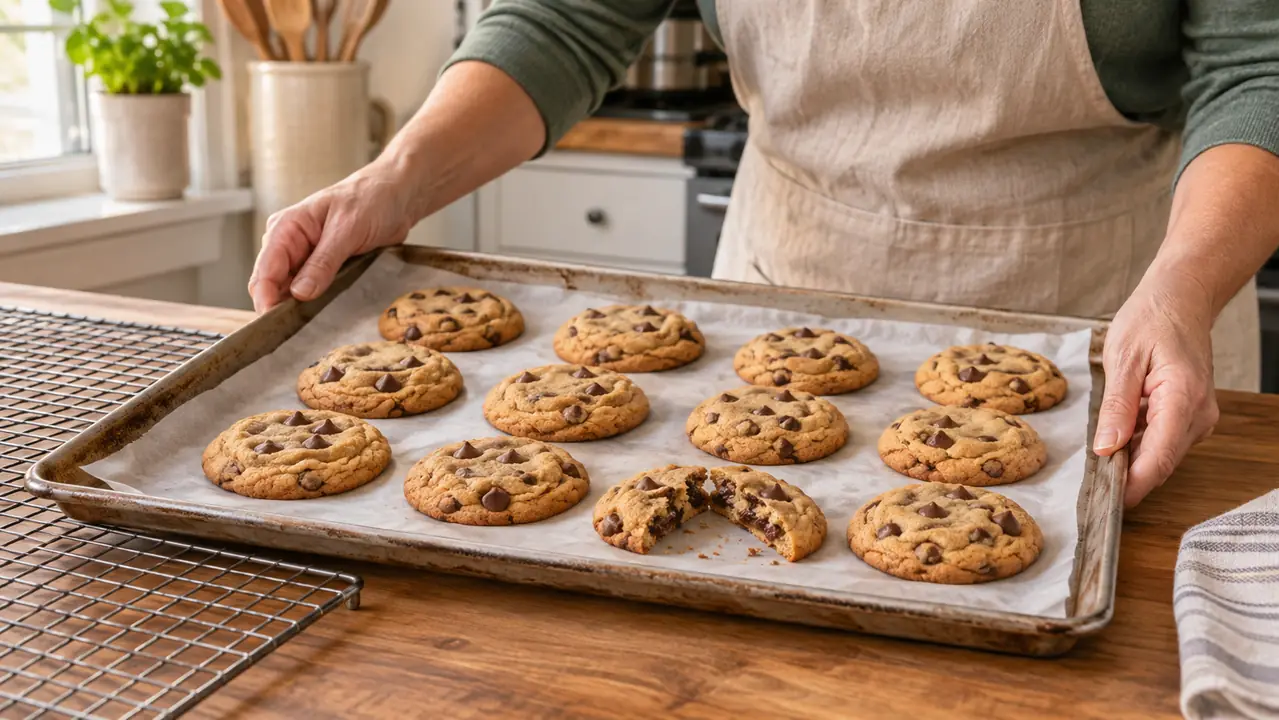
The Nordic Ware pans are from the Naturals line, which is pure aluminum with no coating at all. That is the entire proposition, and it is also the part people misread. Aluminum moves heat fast and evenly, so a pan made of it pushes heat into the dough at a steady rate across the whole surface instead of in hot spots near the corners. My old dark sheets did the opposite. Dark surfaces absorb heat, so the underside of a cookie set and browned before the middle had finished spreading. The result was a cookie with a soft centre and an overdone base, and for years I blamed my oven for it.
On bare aluminum the browning arrives from the bottom at roughly the same pace as the top. My cookies now come out the colour I want across the whole surface and I have stopped rotating the pan at the halfway mark. That one change shaved a few minutes off every cookie bake and removed a habit I had been performing for a decade without questioning it.
I tested this deliberately rather than trusting the first good batch. The first week I had the pans I mixed one full recipe of chocolate chip dough, weighed it into 40 gram balls with my scale so every cookie was identical, and baked them at 375 degrees for eleven minutes on the new pan, then repeated it exactly on one of the old dark sheets before I carried them out to the bin. The aluminum batch came out even from edge to centre and the palest cookie on the pan was barely different from the darkest. The dark sheet gave me the same split I had been eating for years: the six cookies nearest the corners were noticeably darker on the bottom, and the ones in the middle were underdone by a minute. Same dough, same oven, same rack position, same timer. The only variable left was the pan, which is exactly the kind of test I wish I had run a decade earlier.
The trade is honest and you should hear it plainly. A bare surface grabs nothing, so there is no coating to rescue a sticky dough. Parchment paper or a silicone mat handles nearly all of it and for cookies I use parchment every single time. What you get in exchange is a pan with nothing on it that can flake, peel or wear through, because the surface and the pan are the same material. The listing describes it as chemical free, and after sixteen months of scraping and washing, the surface is still the surface. My old dark sheets were shedding flecks into the dishwater by the end.
What the Encapsulated Rim Actually Does
The rim is encapsulated galvanized steel, which is a plain way of saying the steel is folded inside the aluminum edge rather than left exposed. That rim is the reason these pans stay flat.
Warping is the failure I care about most, because it happens to thin sheets the first time they meet a hot oven and it never gets better afterward. A warped pan rocks on the rack, one corner lifts, and from then on it browns unevenly forever. My old sheets were both warped inside a year. Sixteen months in, with these pans going into a 425 degree oven and coming out hot onto a cool counter, both are still flat. I set them down and they sit flush. No wobble, no rock, no spinning on a single corner.
I have pushed that deliberately, because a flat pan is only proven by the abuse you give it. Chicken thighs go in at 425 degrees for about 35 minutes, skin side up, with potatoes crowded around them and a good amount of fat rendering out. That pan comes out heavy and hot, and I set it straight down on the cool granite counter rather than hunting for a trivet, which is the kind of thing that ruins a thin sheet in one move. I have done that most weeks for over a year. Both pans are still flat enough that when I set one on the counter and press a corner, nothing lifts. The old sheet I used to own developed a permanent curve across the middle after about four months of the same treatment, and once a pan bows like that, every cookie that sits over the hump browns faster than its neighbours. You cannot fix it. You can only replace the pan.
The steel rim does a second job worth knowing about. It gives the pan a rigid edge you can grip through a towel, which sounds trivial until you have carried a floppy sheet loaded with a full batch of brownies across a kitchen. The pan weighs 1.7 pounds on its own, light enough to handle one-handed and stiff enough that it does not bow when it is full.
Sixteen months of high heat, hot pans set on a cool counter, and both still sit dead flat. That is the whole claim and it is the one that matters.
The Size Is the Point
A half sheet is 18 by 13 inches by trade reckoning, and this Nordic Ware pan measures 17.9 by 12.9 on the outside so it clears the walls of a standard home oven with room to spare. Most supermarket sheets sold as large are actually closer to a quarter sheet, which is why a recipe promising two dozen cookies spreads into two batches and two pans.
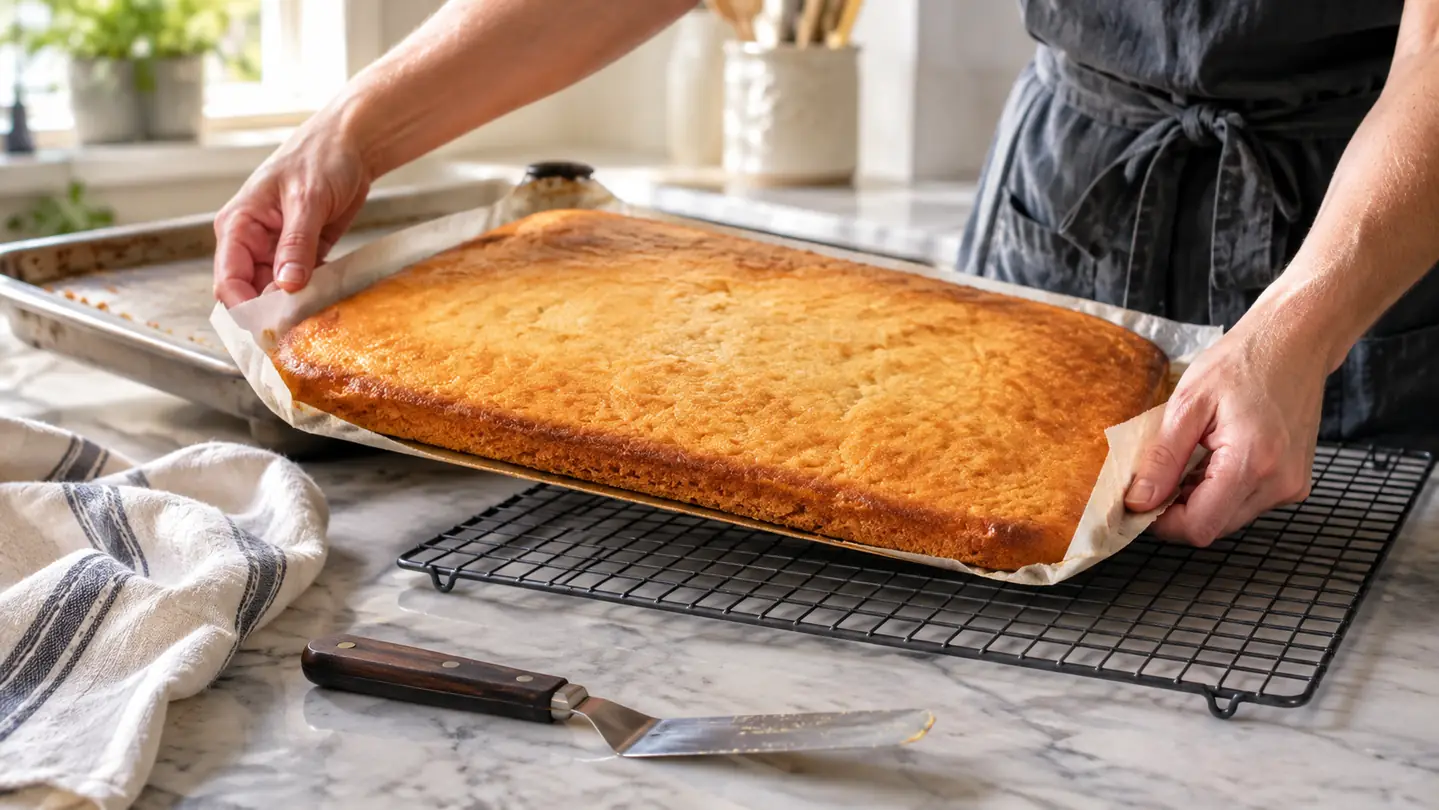
The practical difference is capacity. One batch of dough that used to need two rounds on my old sheets now fits on one pan in a single bake. Same for dinner rolls, same for the sheet cake I make for Maddie, which finally sits in one layer instead of being split between pans.
Storage is the real constraint and it is the first thing I would check before ordering. Mine stand on edge in the cabinet over the fridge, which is not a design feature, just where they fit in a galley kitchen. Standing on edge, two pans take up almost no width. Flat in a shallow drawer, they will not go. If your only storage is a two-inch drawer, measure before you buy.
Sixteen Months In: What Actually Changed
The pans have discoloured. Bare aluminum does that. It moves from bright to a duller, mottled tone, and mine now carry brown patches where cookies sat and paler rings where parchment shielded the surface. This is normal, it does not affect baking, and I would be suspicious of a bare pan that stayed pristine through a year of real use. Nothing has pitted, flaked or rusted. The listing says it never will, and sixteen months of my dishwater agrees so far.
What changed in my baking is smaller and more useful than I expected. I stopped dropping the oven temperature to compensate for dark pans. I stopped rotating. I stopped peeking at cookie bottoms at the eight minute mark. All three habits existed only because of the sheets I had, and they were gone within a month.
Cleanup took longer to settle. For the first few weeks I washed these pans the way I had washed the old ones, with a scouring pad and hot water straight from the oven, and I put a set of fine scratches into the first pan doing it. Nothing structural, but the surface went from mirror smooth to slightly hazy in one corner, and I stopped. What works instead is a ten minute soak in warm water with a drop of dish soap while I eat dinner, then a soft sponge and a plastic scraper for anything baked on. The one time I got distracted and left a pan overnight with a puddle of roasting juices in it, the next morning it had a dull grey patch that no amount of washing brought back. Still flat, still baked fine, but visibly marked. I dry both pans with a towel immediately and stand them on edge in the cabinet rather than nesting them, because nesting lets moisture sit between the surfaces.
The thing that did not change is the amount of attention they need. There is no coating to wipe, so anything sticky needs a soak and a soft sponge. I wash mine by hand, dry them straight away, and never put them away damp. Sixteen months of that routine has kept them smooth. If you want a pan you can swipe with a paper towel and drop back in the drawer, this is not that pan.
What I Liked
- Browns cookies evenly across the whole surface, top and bottom, with no rotating required
- Encapsulated galvanized steel rim has kept both pans flat through sixteen months of high-heat baking
- Pure aluminum with no coating, so there is nothing to flake, peel or wear through
- Half sheet size clears a standard home oven and takes a full batch of dough in one bake
- Two pans in the pack, which is the number you actually want once you start using them
Where It Falls Short
- Nothing is nonstick, so parchment or a silicone mat is required for most baking
- Bare aluminum discolours and mottles with use and washing will not reverse it
- Hand washing and immediate drying is the only routine that keeps them smooth
- Too wide to store flat in a shallow drawer
- The bright finish does not last, and if that bothers you it will bother you a lot
Who This Is For
Anyone who bakes cookies, sheet cakes, rolls or sheet-pan dinners more than once a month and is tired of dark bottoms and pans that rock. If you weigh your flour rather than scooping it, you already care about removing variables, and a Nordic Ware half sheet removes a large one. It suits the cook who roasts more than they bake, too, because bare aluminum takes a hot oven and a hot pan without complaint. And it suits a small kitchen, oddly, since two pans cover cookies, cake, cooling and roasting between them.
Who Should Skip It
Skip it if you want a pan you can wipe clean and put away. Skip it if you bake only a few times a year and already own a sheet that sits flat, because nothing here will change a batch of brownies you make twice a year. Skip it if you have nowhere to store something 18 inches wide. Skip it if you want a dark nonstick surface for a specific job, like delicate fish that would tear on bare metal. And skip it if the look of a used pan bothers you, because a bare aluminum pan will tell you exactly how much it has worked.
Two pans, one batch, no rotating, no rocking on the rack
If your cookie bottoms are browning before the middles set, the pan is the variable. Pure aluminum, a steel rim folded into the edge, 17.9 by 12.9 inches, and a two-pack so one is always clean. Sixteen months of my own oven heat says the rim holds.
Amazon Check Today's Price on Amazon →