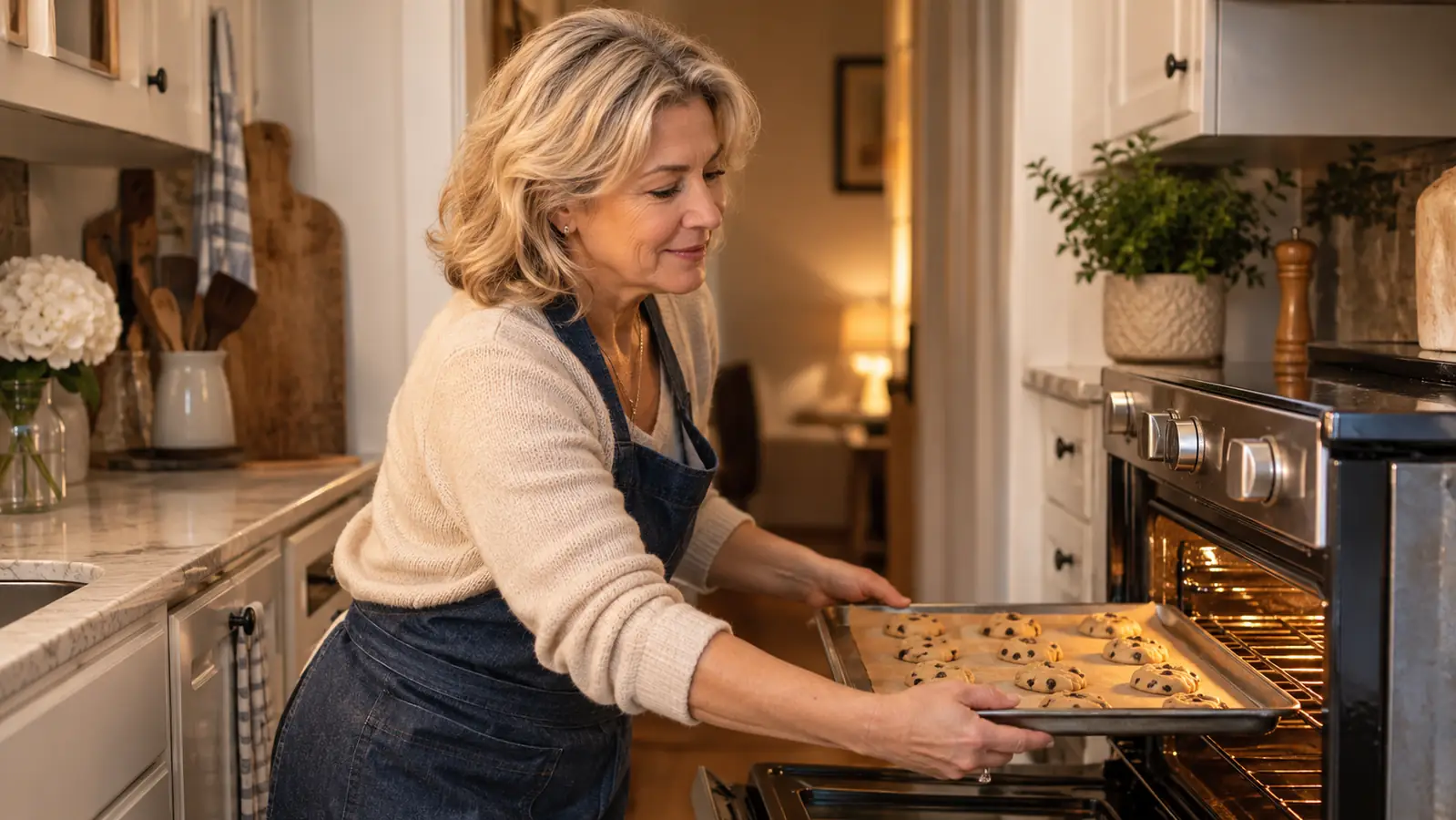
Here is the short answer I give friends who ask: for cookies, roasted vegetables, sheet cakes, and anything where an even brown bottom matters, the Nordic Ware Naturals half sheet pan is the better pan. A nonstick baking sheet is easier to wipe clean and easier to trust with sticky bars, but it will not brown as evenly, and the coating has a working life. I trained in pastry and spent seven years in a hotel pastry kitchen before I moved to a Baltimore rowhouse with one standard 30-inch electric oven and about six feet of counter. I bought the Nordic Ware two-pack about 16 months ago to replace two thin nonstick cookie sheets that had warped and burned cookie bottoms. That replacement is the whole comparison in miniature. One pan is a heat tool. The other is a heat tool with a layer on top.
The confusion comes from the word easier. A nonstick sheet feels easier on day one: cookies slide off, cleanup takes a minute, and you can skip parchment. But ease of release is not the same as even baking. A bare aluminum pan is a heat tool. A coated pan is a heat tool with a layer between the metal and your food. That layer changes how the bottom of a cookie, a biscuit, or a sheet cake browns. It can also change how long the pan lasts. Once you see the difference on a tray of chocolate chip cookies, you cannot unsee it. The pan that feels less convenient is often the one that gives you a better bake.
| Nordic Ware half sheet pan | Nonstick baking sheet | |
|---|---|---|
| Even browning | Bare aluminum spreads heat across the pan; cookie bottoms brown evenly from edge to center | Coating adds a layer between metal and food; browning can be uneven, especially on thin sheets |
| Release | Sticky cookies and bars need parchment, a liner, or a greased pan | Coating releases most baked goods with little or no grease |
| Warping | Encapsulated galvanized steel rim helps the pan hold its shape | Thin nonstick sheets are more likely to buckle when they hit a hot oven |
| Durability | Pure aluminum, does not rust, lifetime limited warranty | Coating scratches, stains, and wears down over time |
| Cleaning | Rinse and dry; baked-on sugar needs a short soak | Usually wipes clean; no seasoning required |
| Metal utensils | A metal spatula or bench scraper will not ruin the baking surface | Metal tools can gouge the coating |
| High-heat roasting | Works for sheet-pan suppers and roasted vegetables | Coating has heat limits and can degrade with high heat |
| Delicate cookies | Parchment is the safe move for tuiles, macarons, and sticky doughs | Nonstick surface is more forgiving for fragile items |
| Best for | Cookies, sheet cakes, roasted vegetables, cooling, general baking | Sticky bars, low-fat baking, quick cleanup |
| Storage | Rims make the pans easy to stand on edge | Also stacks, but coating can scratch against other pans |
Where Nordic Ware Wins
The first win is browning, and it comes from the material. The Nordic Ware Naturals pan is pure aluminum, which is why it spreads heat across the surface instead of concentrating it in one spot. The exterior measures 17.9 by 12.9 by 1 inches, and the interior measures 17.1 by 12.1 by 1 inch. That is the size I reach for when a recipe says half sheet. A batch of chocolate chip cookies fits with room between them, which matters more than most people think. Crowded cookies steam. Spaced cookies brown. The pan gives me that space without turning a single batch into a two-pan job.
The second win is the rim. The pan has an encapsulated galvanized steel rim, and that is the part that helps it hold its shape when it goes from a hot oven to a cool counter. My old thin sheets would buckle with a bang in the oven. The Nordic Ware pans have not done that in 16 months of weekly use. They look used now, the way a pan does after roasted vegetables, butter, and hot metal. I do not baby them. I stack them, I roast on them, I scrape them with a bench scraper. They still sit flat. That flatness matters when you pour cake batter or slide a spatula under a cookie.
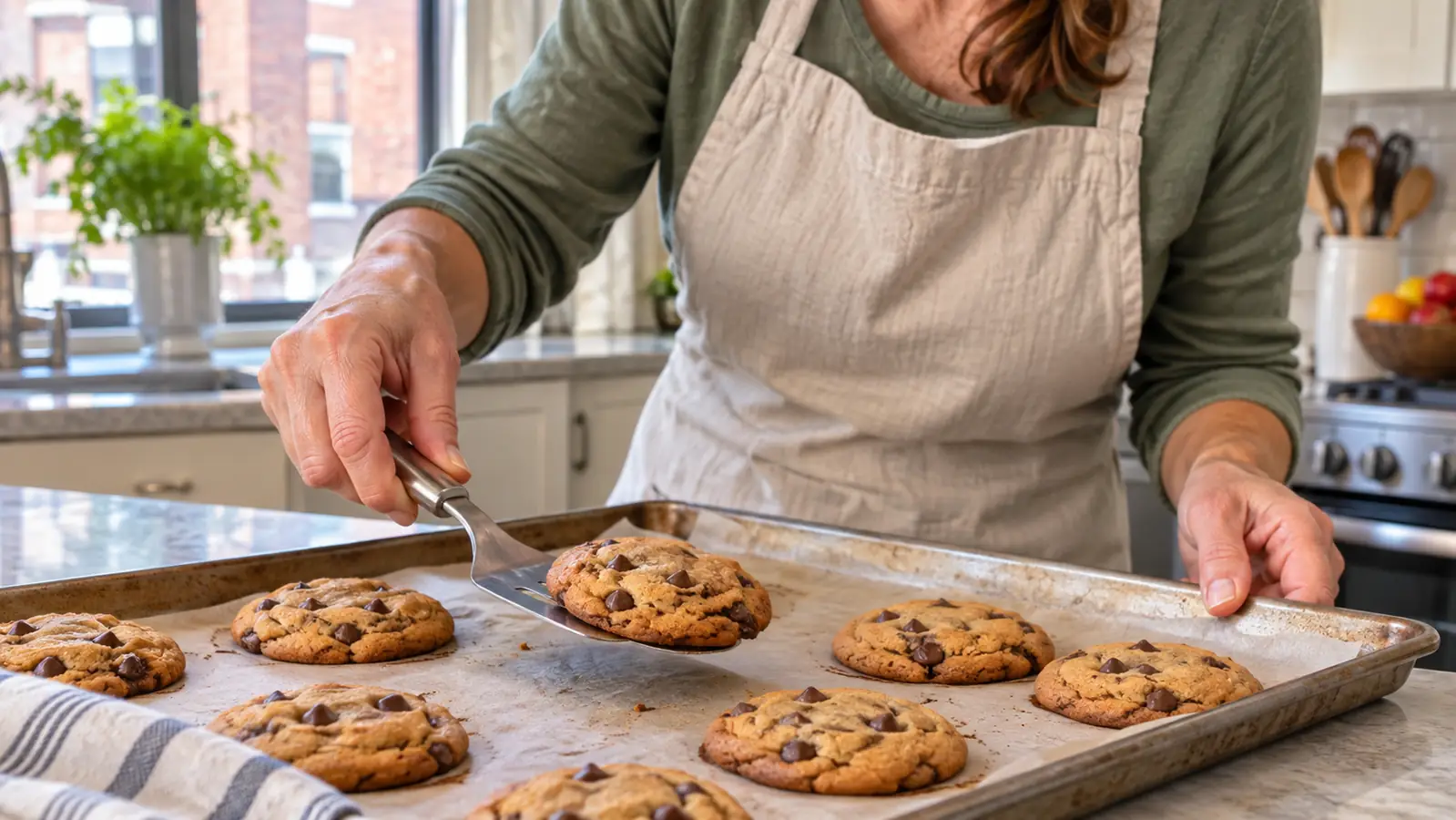
The third win is durability. The pan is aluminum, it does not rust, and it carries a lifetime limited warranty. There is no coating to scratch, so a metal spatula is not a threat. I use a bench scraper to lift a stuck bit of sugar, and nothing happens. That sounds small until you have owned a nonstick pan whose surface started peeling into your food. A bare aluminum pan does not have a finish to lose. It will look used. It will keep baking the same way. For a home baker who wants one pan to last, that is the point.
Where a Nonstick Baking Sheet Wins
I will not pretend the nonstick pan has no advantages. Release is the big one. Brownies, lemon bars, and sticky gingerbread come off a nonstick sheet with almost no effort. If you bake those often and hate lining a pan, the nonstick sheet is the more pleasant tool. It also wipes clean faster. A bare aluminum pan will hold onto baked-on sugar if you leave it, and it needs a short soak. The nonstick pan does not ask for that. On a weeknight, when the sink is full and you want to be done, that convenience is real.
The second advantage is low-fat baking. When a recipe uses very little butter or oil, a nonstick surface gives you a safety net. The same is true for fragile cookies and for anyone cooking for a household that does not want parchment. The tradeoff is lifespan. A nonstick coating is a consumable. It scratches, it stains, and eventually it stops releasing. A bare aluminum pan has no such layer, so it does not fail in that way. I am not against nonstick. I am against expecting a coating to last like metal. Once you know which job each pan does, you can choose with your eyes open.
The pan I would buy again for even cookie bottoms
Nordic Ware Naturals half sheet pans, 2-pack. Bare aluminum, encapsulated galvanized steel rim, lifetime limited warranty. I replaced two warped nonstick sheets with these and have not looked back.
Amazon Check Today's Price on Amazon →The Browning Difference, in Plain Terms
A nonstick coating is a thin barrier between the metal and the food. That barrier is useful for release, but it changes heat transfer. On a bare aluminum pan, the bottom of a cookie gets direct contact with a hot metal surface that conducts heat evenly. On a coated pan, the coating slows that transfer a little, and on a thin sheet it can create hot spots. You may get a cookie that is pale in the center and dark at the edge, or one that sets before it spreads. Neither result is a disaster. But if you bake often, you notice the pattern.
I noticed this most with chocolate chip cookies. On my old nonstick sheets, the first batch would brown unevenly, and the bottoms would go from pale to dark before the centers were set. On the Nordic Ware pan, the cookies brown from the bottom up at a more even pace. I bake at 375 F, rotate the pan once, and pull them when the edges are set and the centers are still soft. The pan gives me a wider window. That is the practical difference. It is not a trick. It is heat transfer doing what it should. The same window helps with biscuits, scones, and anything that needs to rise before it sets.
The same thing applies to sheet cakes and biscuits. A level, even bake means the edges do not overbake before the middle is done. I line the pan with parchment for cake, leave an overhang, and lift the cake out to cool. The pan itself is not the star of that process, but it is the reason the process is repeatable. A warped pan makes a level cake harder. A pan with a worn coating makes release a gamble. A bare aluminum pan with a steel rim gives you a flat surface and one less variable. In a home kitchen, fewer variables is most of the work.
A nonstick pan makes cleanup easier. A bare aluminum pan makes the bake easier to repeat.
How I Use the Nordic Ware Pan Through a Week of Baking
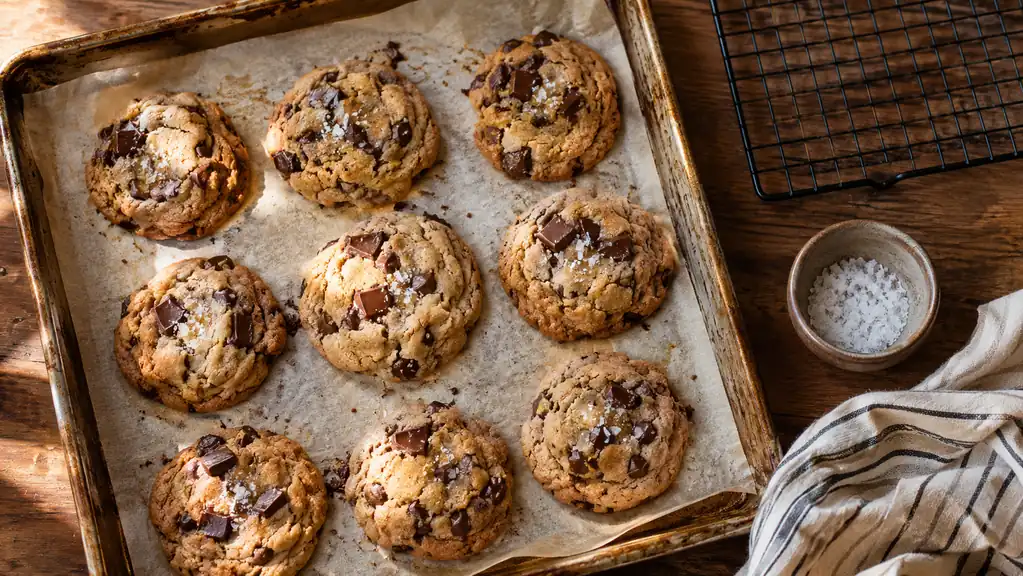
For cookies, I line the pan with parchment even though the pan is bare aluminum. Parchment is not there to protect the pan. It is there to protect the cookie. It also makes cleanup a matter of lifting the sheet and tossing it. I scoop dough with a scale, space the mounds two inches apart, and bake one pan at a time on the middle rack. The pan cools between batches, which keeps the dough from spreading before it hits the oven. If I rush and put dough on a warm pan, the cookies spread thinner. That is not the pan's fault. It is mine.
For roasted vegetables, I use the pan bare. I toss broccoli or squash with oil, salt, and pepper, spread it in a single layer, and roast at 425 F. The pan takes the heat without complaint. There is no coating to worry about at that temperature, and no nonstick surface to scratch with a metal spatula. I scrape the pan with a bench scraper while it is still warm, then wash it by hand. That is the whole care routine. The pan does not need seasoning. It does not need a special cleaner. It needs to be washed and dried, and it needs to be used.
For sheet cakes, I use parchment and a little butter on the sides. The pan is 1 inch deep, which is enough for a thin sheet cake but not a deep lasagna. I know that sounds obvious, but the depth matters. A half sheet pan is not a roasting pan. It is a shallow pan for cookies, cakes, vegetables, and anything that needs surface area more than volume. I use it for dinner rolls too, though I keep them crowded on purpose for soft sides. The same pan that gives cookies space can give rolls a snug fit. That flexibility is why it stays on the counter.
Care, Storage, and What to Expect
I wash the pans by hand with warm water and dish soap, then dry them right away. I do not leave them soaking overnight. Aluminum will change appearance over time, and that is normal. It does not affect the bake. I stack the two pans with a sheet of parchment between them, and I stand them on edge in the cabinet over the fridge. In a narrow galley kitchen, that vertical storage is the difference between keeping them and not. The pans are light enough to move with one hand, and the rim gives me something to grab.
The one thing I would tell a new owner is to use parchment for sticky things. The pan is not nonstick, and it is not meant to be. Cookies with a lot of butter release fine after a minute of cooling. Brownies and sticky bars need parchment or a liner. If you try to bake a gooey bar on bare aluminum and expect it to slide out, you will be disappointed. That is not a flaw in the pan. It is the nature of bare metal. Learn which recipes need a liner and the pan becomes simple. Guess, and you will think the pan is fighting you.
Who Should Buy Which
Buy the Nordic Ware half sheet pan if you bake cookies, biscuits, sheet cakes, roasted vegetables, or sheet-pan dinners, and you want a pan that browns evenly and lasts. Buy it if you have already thrown away a warped nonstick sheet and you are tired of replacing them. Buy it if you do not mind lining the pan for sticky recipes. The 2-pack matters because one pan is often in the oven while the other holds cooled cookies or rests on the counter. I use both in the same afternoon more often than I expected. One pan is never enough when you are baking for a church sale or a family dinner.
Buy a nonstick baking sheet if release and cleanup are your top priorities, if you bake a lot of sticky bars and brownies, or if you cook with very little fat. Buy it if you want a pan you can wipe clean and not think about. Just know that the coating is the part that wears out. When it scratches or stops releasing, the pan is done. A bare aluminum pan does not have that clock on it. That is the trade you are making. If you bake both ways, keep one nonstick sheet for sticky jobs and use the Nordic Ware pans for everything else. That is what I would do if I had the cabinet space.
If you want one pan to handle cookies, cake, and vegetables, start here
The Nordic Ware Naturals half sheet pan is the one I reach for first. Two pans, bare aluminum, made in America. Use parchment for sticky bakes and a metal spatula for everything else.
Amazon Check Today's Price on Amazon →