
I learned what a bench scraper was for at twenty-four, in a hotel pastry kitchen, from a woman who never once used the word. She would hand me one and say clean as you go, and then stand there until the counter was actually clean. Seven years of that and the motion lives in my hands. What I did not have, for the twenty years after I left, was a scraper in my own kitchen.
My kitchen in Baltimore is a galley: six feet of counter, one thirty-inch electric oven, and a pantry cabinet that has to hold everything else. When you bake on a surface that small, flour escapes. It works into the seam where the counter meets the stove and stays there. Dough sticks wherever you set it down. For years I dealt with that using the edge of my hand, a butter knife, and a lot of sighing.
About eighteen months ago I bought the OXO Good Grips Multi-Purpose Scraper and Chopper, mostly because I already trusted OXO for a vegetable peeler and because the blade had markings on it. It hangs on a hook by the stove now. It is the plainest tool I own and the one I reach for most often, four or five times in a baking week.
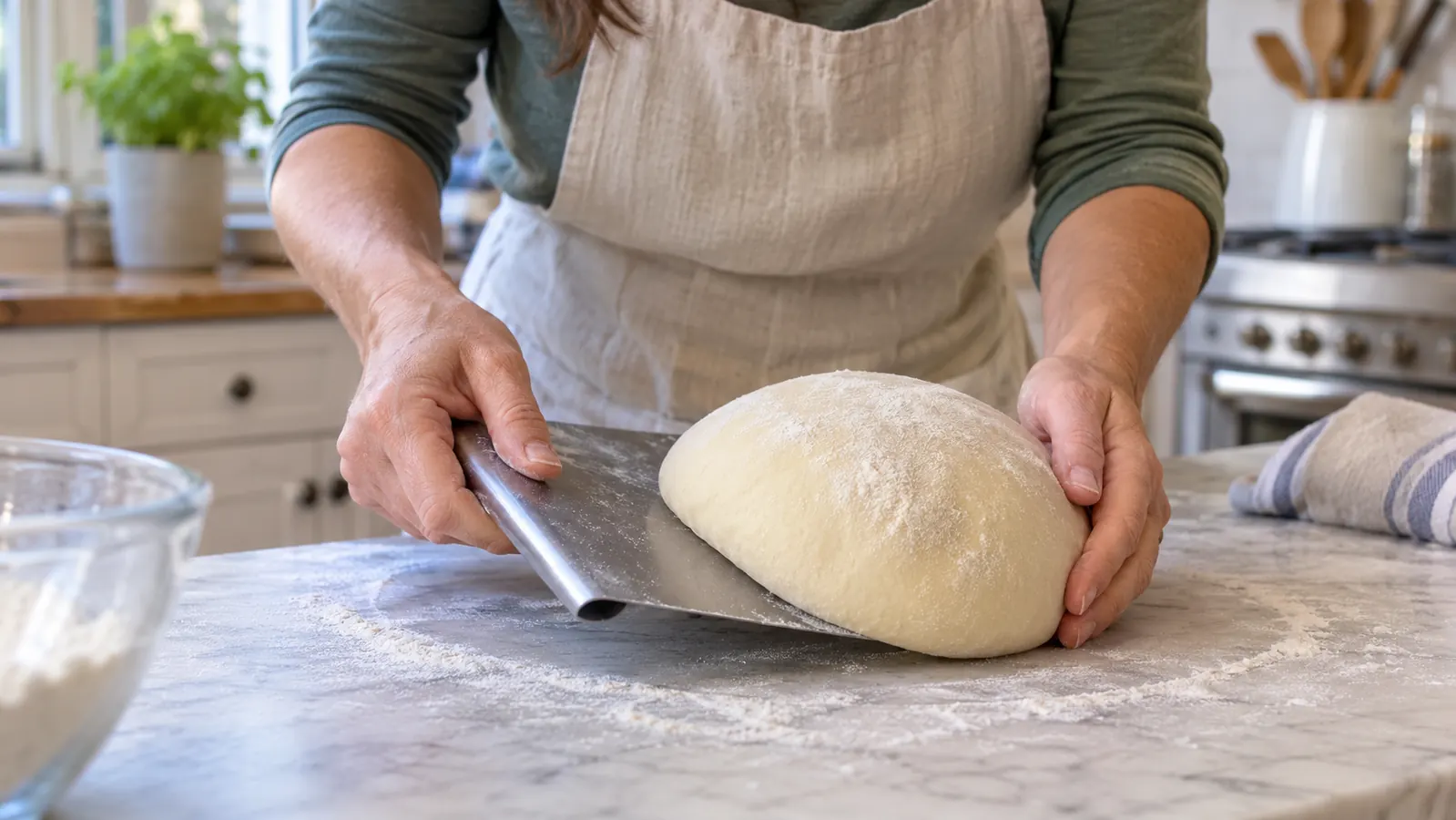
Here is what it is, plainly. A stainless steel blade six inches long with a rectangular edge, stamped with one-inch markings down one side. A soft, non-slip grip that holds when your hands are floured or wet. The whole thing is 6.25 inches long, 4 inches wide and 1.75 inches high, and it weighs about 0.37 kg, light enough for a small hook and heavy enough that it does not skate across the counter when you press down.
Seven years in a professional kitchen, and the tool I missed most at home was the plainest one: a flat blade with a handle.
The tool that made six feet of counter feel like enough
Six inches of stainless steel, one-inch markings, a grip that holds when your hands are sticky. Mine hangs by the stove and gets used four or five times a week.
Amazon Check Today's Price on Amazon →Where it earns its hook is dough. A batch of sandwich bread, a tray of dinner rolls, pie crust, brownies for the church bake sale. You press the blade straight down through the dough and the cut is clean in one motion, no sawing and no dragging the edge through. When I divide a risen batch into rolls I get twelve that are genuinely the same size, which matters more than people expect, because uneven rolls mean some are done and some are still pale.
The part I did not see coming is lifting. Rolled pie dough sticks to a counter no matter how carefully you flour it. You slide the blade flat underneath the round and it comes up in one piece, ready to fold over the apples. Before this I was doing that with two spatulas and a certain amount of swearing, and losing a corner about half the time.
The markings earn their place too. For bar cookies I press the blade at the one-inch line across the pan to score, then cut on the score. Even squares, no ruler, no guessing. And when the bake is over, I hold the blade at a shallow angle and push the flour and the dried bits into a pile, then into my hand and the bin. Thirty seconds, no cloth, no spray.
The Honest Limits
It is not a knife. The listing calls it a scraper and chopper and it will go through soft things, but I would not push it through a carrot or try to break down a squash with it. It is one size, six inches, which is right for a half sheet pan and right for my counter, and short if you are working a big batch on a wide board. I have never wished for a longer one, but I have also never made four loaves at once.
People ask why not a bench knife, the kind with a wooden handle and a sharp edge. I have used both. The blunt edge on this one is the point for me: it scrapes a counter without gouging it and it lifts dough without slicing through it. A sharp bench knife is the better cutter and the worse scraper, and I do more scraping than cutting.
I use it for cutting cold butter into flour for pie crust as well, pressing and chopping until the pieces are the size of peas. A pastry blender does that job, and so does a food processor, but the scraper is the thing already in my hand and there is nothing extra to wash afterward.
One more thing worth knowing: a flat blade like this is not a substitute for a cloth. It moves solids. Syrup and egg wash still need a rag. What it does is keep the solids from ever reaching the rag in the first place, which is most of the work.
What I'd Tell You If We Were Sitting at My Kitchen Table
I would tell you this is not a purchase that changes what you can bake. It changes how much of the bake is spent tidying. If you make bread or pie or bar cookies more than once a month, and especially if your counter is short, the OXO scraper will earn the hook it hangs on. If you bake a cake twice a year and you are content with a butter knife, you already own the tool you need, and I would rather you spent the space on a scale.
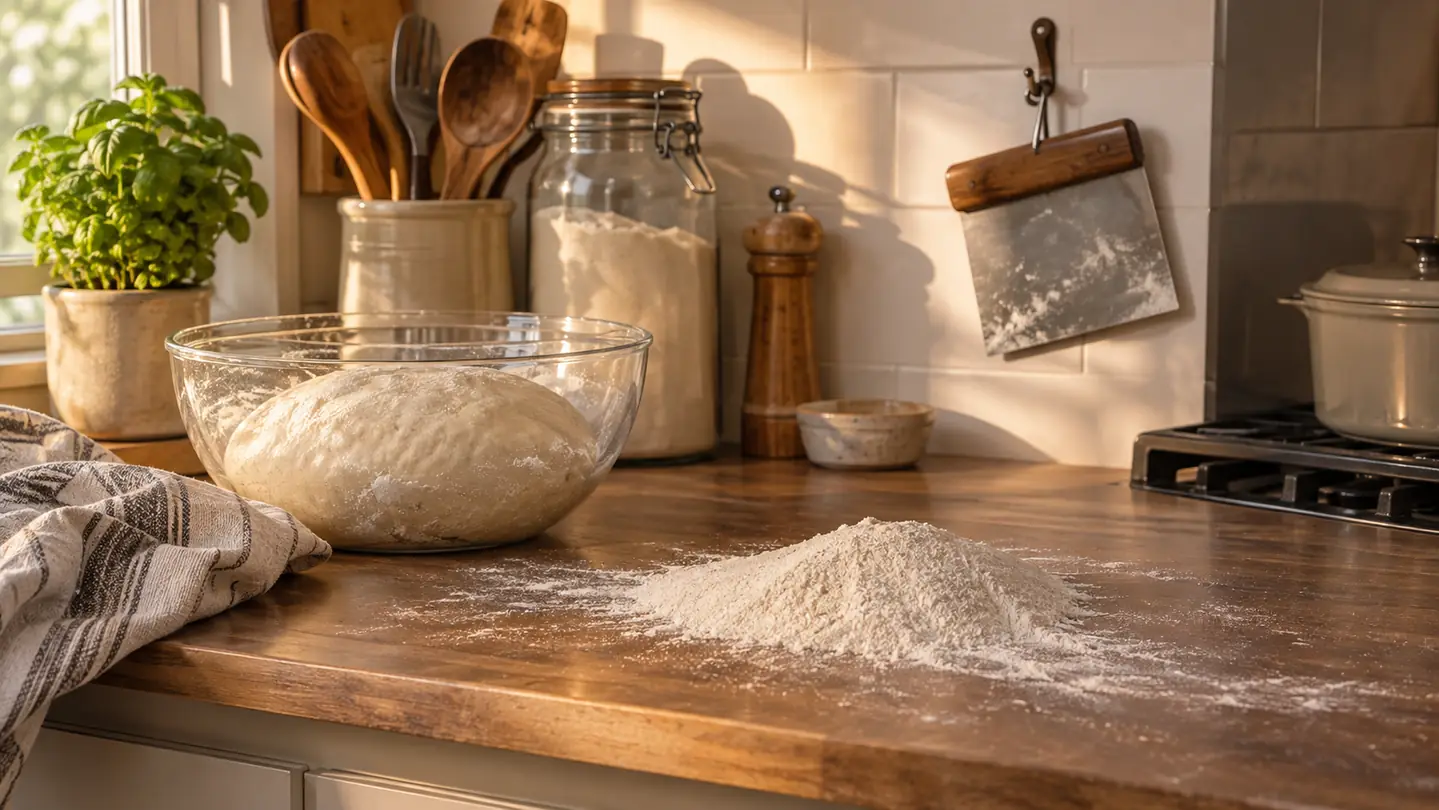
And if you are choosing between this and a plain blade with no markings, take the marked one. The markings are the difference between a tool that scrapes and a tool that measures while it scrapes, and they add nothing to the effort. Hang it where you can reach it. A scraper in a drawer is a scraper nobody uses.
Hang it where you can reach it and it will earn its place
Six-inch stainless blade, one-inch markings, a soft grip that holds when your hands are floured. Eighteen months in my kitchen and it has not come off the hook.
Amazon Check Today's Price on Amazon →