
I baked with measuring cups for twenty years and I was good at it. Then about two years ago I bought a digital kitchen scale, and the first thing it did was prove that my one cup of flour had been four different amounts on four different days. Same flour, same cup, same baker, same recipe. That is the entire argument for weighing in a single sentence, and everything below is just the ways that plays out at the counter.
The scale I use is the Etekcity digital kitchen scale, the 11 pound capacity model with a 1 gram readout. It is small enough to live flat in the pantry cabinet of my Baltimore galley kitchen, which has about six feet of counter and no patience for a gadget that needs to stay out. It runs on two AAA batteries, which came in the box, and I have changed them once in two years. That is the hardware. Here is what it actually changes.
The tool that ended my four-different-cups problem
11 pound capacity, 1 gram readout, tare, and five units on one small platform that stows flat in a cabinet. This is the scale I have used on every bake for two years.
Amazon See the Etekcity scale on Amazon →It ends the flour guessing game
Scoop a cup of all-purpose flour straight from the bag and it can land anywhere from roughly 120 to 150 grams depending on how packed it is and how deep you dig. That is a wide swing, and it happens before you have added a single other thing. Weigh 125 grams instead and the cookies you made in March are the cookies you make in October. This is the reason I bought the scale and the reason I have not gone back.
Any recipe from anywhere becomes readable
British and European formulas give you grams. Older American ones give you ounces. Somebody's grandmother's card says a coffee cup of this and a wineglass of that. The Etekcity reads in ounces, pounds and ounces, fluid ounces, grams and millilitres, so you can sit down with a recipe from a Swedish baking blog and not spend ten minutes doing arithmetic on the back of an envelope.
Tare turns four bowls into one
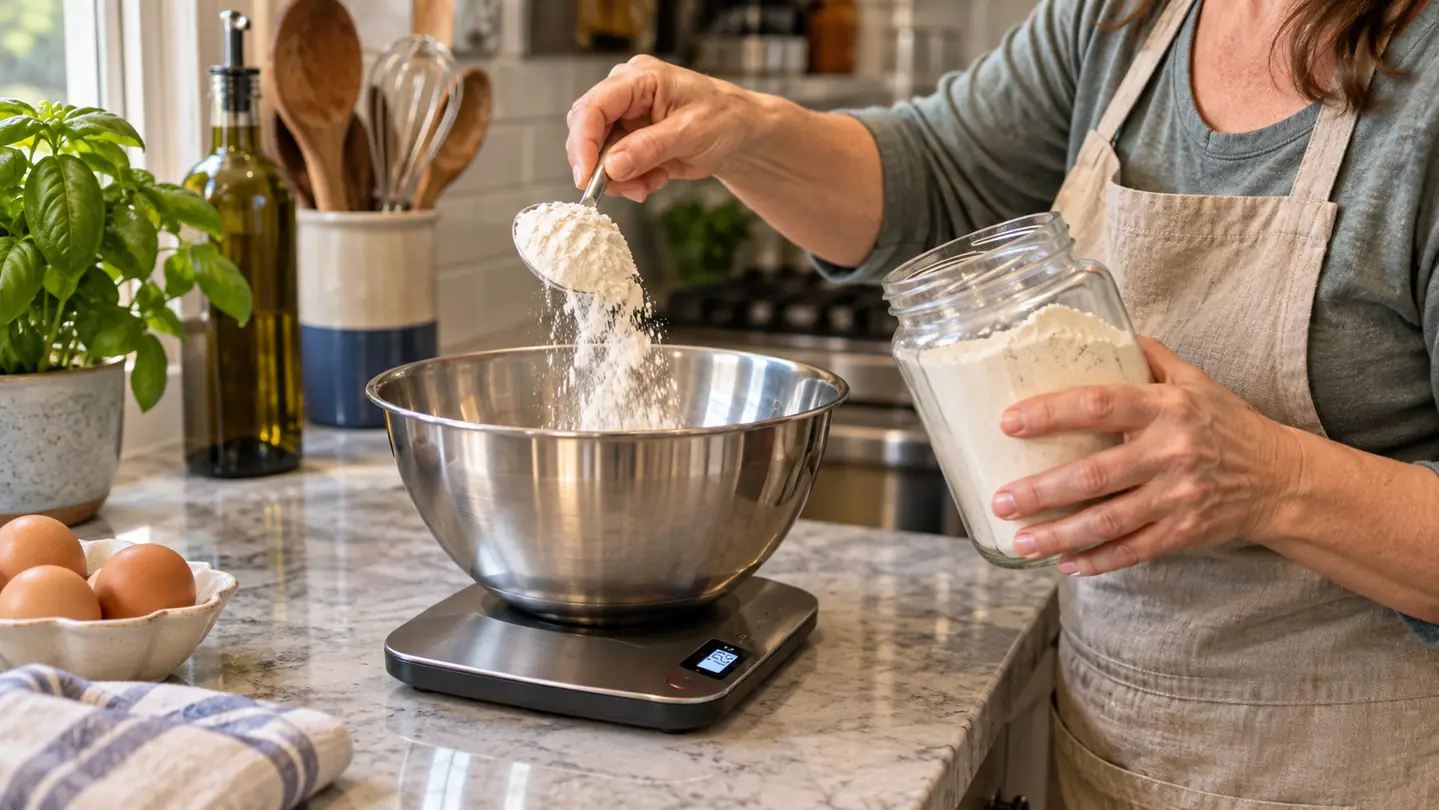
Set your mixing bowl on the platform, press tare, and the display goes back to zero. Add flour, tare. Add sugar, tare. Add butter, tare. You are not washing four measuring cups and you are not squinting at the line to decide whether that was one cup or one and a quarter. My husband Paul does the dishes in our house, and this is the change he noticed first.
Doubling or halving a recipe stops being guesswork
Halving by volume is where things quietly fall apart, because half of three quarters of a cup is not a measurement anybody can eyeball. On a scale, doubling is a bigger number and halving is a smaller one. I cut a layer cake formula down to two thirds for a small pan last month and it worked on the first try, which is not something I could have said when I was working in cups.
Every cookie on the tray browns at the same rate
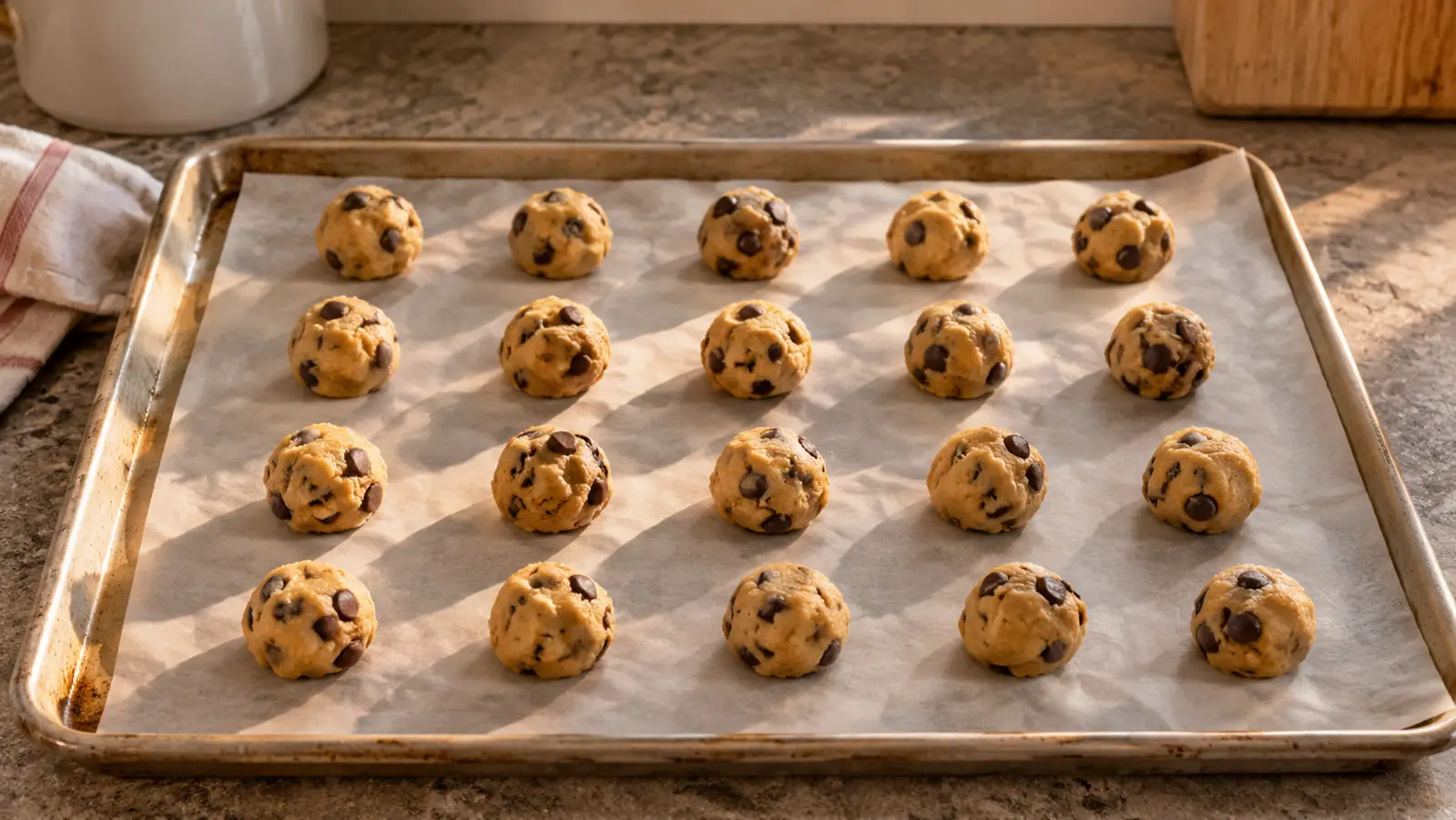
The reason one cookie comes out pale while its neighbour is catching at the edges is that they are different sizes. Weigh the dough and portion it, 30 grams each, and the tray suddenly behaves. Same browning, same spread, same chew from the first cookie to the last. It takes about ninety seconds longer than scooping with a spoon and it removes the whole argument.
My one cup of flour had been four different amounts on four different days. The scale proved it in a single afternoon.
Bread and roll dough divides evenly
Weigh the whole batch of dough, divide by the number of rolls you want, and you get rolls that proof and bake at the same speed. When I made dinner rolls by eye, three of them were always done before the rest and one was a lump in the middle of the pan. Now they come out looking like they came from the same batch, because they did the same thing for the same amount of time.
Honey, molasses and peanut butter stop wrecking your cups
Sticky things are the worst possible use of a measuring cup. Set the bowl on the scale, tare, and spoon the honey in until the number is right. Nothing sticks to anything you have to scrape. Same for peanut butter in a cookie dough and molasses in a gingerbread. You will dirty fewer spoons and you will get all of the ingredient into the bowl instead of half of it down the side of the cup.
You catch a mistake while it can still be fixed
When you add liquid by eye, you find out it was too much after the dough is already mixed. Weighing means you pour to a number and stop. If the dough looks dry at that number, you add a tablespoon at a time and watch what it does. The scale does not make you a better judge of dough. It gives you a fixed point so that your judgment has something to work against.
Layer cakes come out level, without trimming
Two pans of the same size holding different amounts of batter will never bake to the same height, and a lopsided stack is a frosting problem you cannot fix later. Weigh the bowl, subtract, divide by two. My niece Maddie gets a layer cake every birthday and the last two have stacked straight with no trimming and no domed middle to saw off.
It earns its counter space, which is rare for a gadget
My kitchen is a rowhouse galley with about six feet of counter, so a tool has to justify itself. The Etekcity is compact enough to sit flat in the pantry cabinet between uses, the surface is 304 food grade stainless steel that wipes clean with a damp cloth, and the backlit LCD is readable without leaning in. It weighs 200 grams, so it is not something you notice moving around.
What I'd Skip
What would I skip? Weighing things that do not change the outcome. A pinch of salt, a teaspoon of vanilla, a quarter teaspoon of baking soda are not worth the tare. I still use my measuring cups for rice and for stock, and I still scoop with a spoon when I am making something forgiving. What I would also skip is the idea that you need a scale with more functions than you will ever press. Mine reads five units, tares, and switches itself off. I have used exactly those things for two years and never once wanted more. And do not convert every recipe you own in one weekend. Convert the three you bake most and let the rest follow when you get to them.
Two years in, it is still the first tool I would buy again
It has lived in the pantry cabinet, needed one battery change, and changed more of my baking than any pan or mixer I own. If you are going to start somewhere, start here.
Amazon Check the Etekcity scale on Amazon →