

For about twenty years my chocolate chip cookies were a coin flip. Same recipe, same mixing bowl, same oven, and yet one batch would flatten into lace at the edges while the next sat up like little pucks. I blamed the oven and bought a thermometer. I blamed the butter and started chilling it. I blamed the vanilla, which was expensive and probably fine. None of it fixed anything.
The problem was the flour, and it took me an embarrassing length of time to see it. I scooped straight out of the bin with a measuring cup, the way my mother did and the way most recipes quietly assume you will. Every scoop packs a different amount into the cup. A light scoop and a heavy scoop are not the same cup, and the heavy one can carry close to a third more flour than the light one. That is the whole difference between a cookie that spreads and a cookie that stands up.
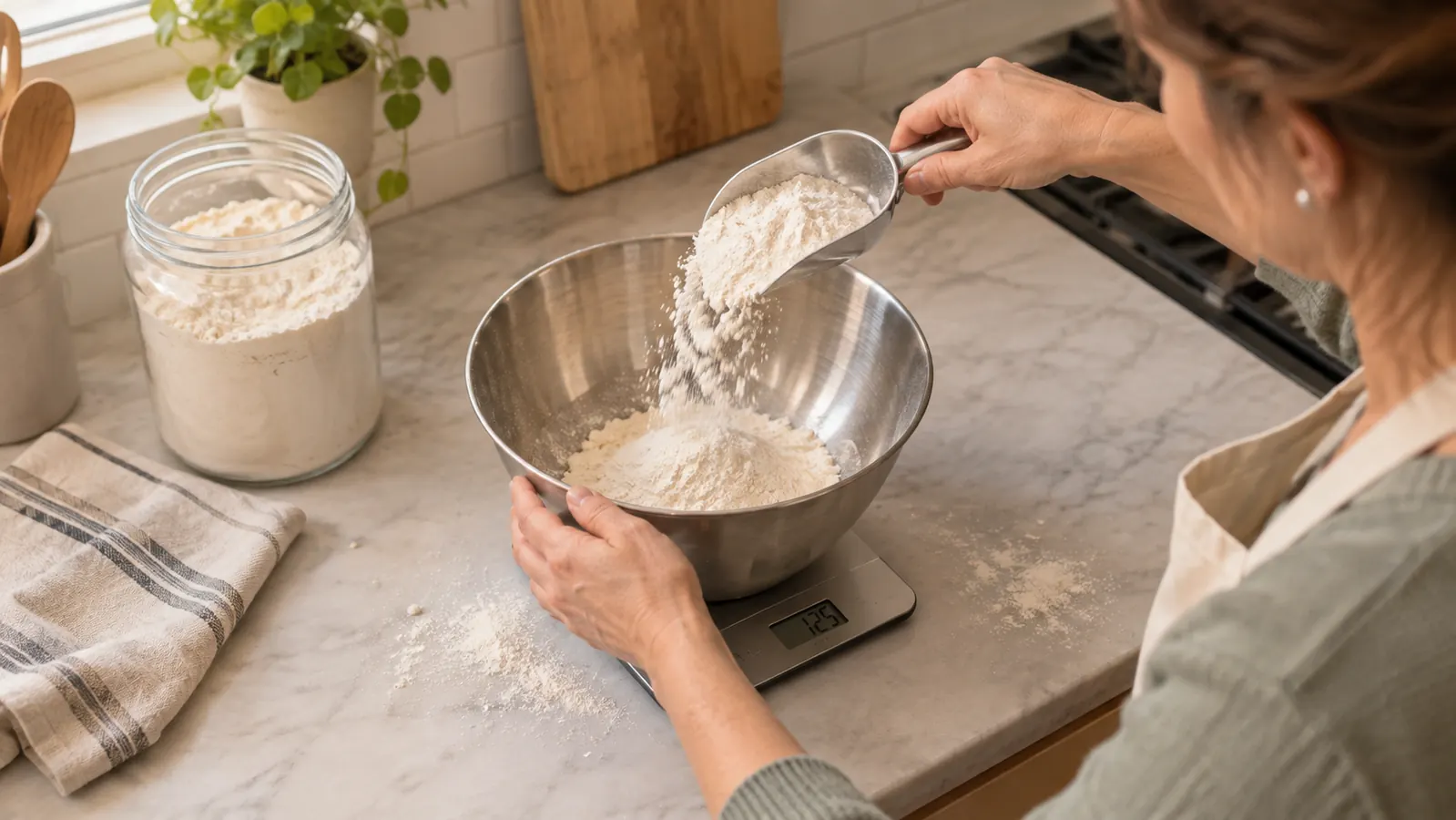
About two years ago I bought an Etekcity digital kitchen scale, the 11 pound one, and the cookies stopped surprising me. Not because the scale does anything clever. Because 125 grams of flour is 125 grams of flour, and a cup of flour is a rumor.
I came to this late, and I want to be honest about that. I went through a baking and pastry program at 24 and spent seven years in a hotel pastry kitchen where every single thing went onto a scale before it went into a bowl. Then I moved home, and for two decades I scooped with cups in my own kitchen, because that was the equipment I had and it seemed like enough. This scale was the first thing I bought for this house that changed my results rather than just saving me a step.
The way it works is simple enough that I almost do not need to describe it. Bowl on the platform, press the button that zeroes the reading, add flour until the number matches the recipe. Zero it again, add the sugar. Zero it again, add the butter. You are not washing four measuring cups afterward, and you are not wondering whether the brown sugar you packed this afternoon was packed as firmly as the brown sugar you packed in March. The scale reads in ounces, pounds and ounces, fluid ounces, grams and milliliters, so I can bake from a British book in grams and from my mother's index card in ounces on the same afternoon without converting anything in my head.
Paul does the dishes in this house. He noticed the smaller stack in the sink before I did.
125 grams of flour is a fact. A cup of flour is a rumor, and my cookies paid for it for twenty years.
The variable in your cookies was never your technique. It was your cup.
Weigh the flour once and the batch stops moving on you. The Etekcity reads to the gram, zeroes between every ingredient, and stores flat in a cabinet.
Amazon Check Today's Price on Amazon →My kitchen is a narrow galley in a Baltimore rowhouse with about six feet of counter, so counter space is the thing I have least of. The scale is small and flat, and it lives in the pantry cabinet behind the flour bin, coming out and going back without a fight. The platform is stainless steel, so a wipe with a damp cloth handles spilled sugar and a dusting of cocoa. I have never had to scrub it.
Here is what it will not do. It reads in one gram steps, so if a formula asks for three grams of instant yeast or two grams of salt, you are working right at the edge of what it can tell you, and a careful pinch is honestly about as accurate. This is a counter scale for ingredients, not a laboratory balance, and it should not be sold as one. What it does handle easily is the real work: a full bowl of bread dough, a pot of sliced apples for pie, five pounds of flour straight out of the bag, a two pound chunk of butter.
It runs on two AAA batteries, which came in the box, and I have changed them once in two years. The display is backlit with numbers large enough that I can read it without leaning in, which at 52 I appreciate more than I expected to. The Etekcity has taken two years of near weekly use, including a run of holiday baking where it did not leave the counter for a week, and it still comes on and zeroes like it did the first time.
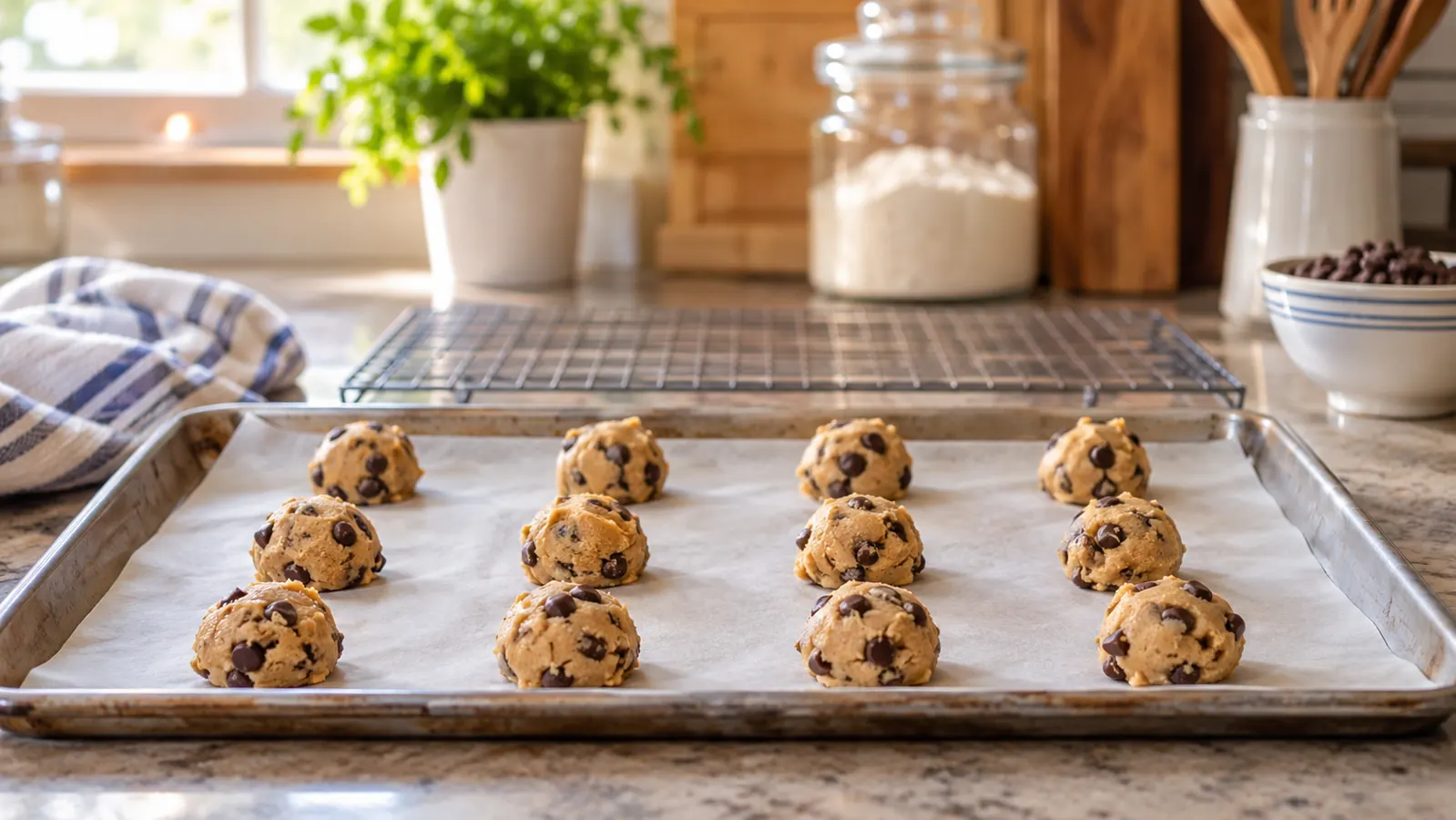
The part I did not see coming was how much the scale would change the shape of the work. I portion cookie dough by weight now, so the whole tray browns evenly instead of three pale ones in the back and three dark ones up front. Bread dough gets divided by total weight instead of by eyeball, so two loaves come out the same size and proof at the same speed. Pie dough is easier, because I weigh the butter and the water and stop guessing at the hydration. Even Maddie's birthday cake is more predictable, since the layers are now the same thickness and they bake in the same time.
None of that is technique. It is just a number coming back the same way every time, which is what a recipe was always supposed to be.
What I'd Tell You If We Were Sitting at My Kitchen Table
I would tell you that you probably do not need a new oven, chillier butter, or a better brand of vanilla to get the same cookie twice in a row. I would tell you that the scooped cup is the part that moves, and that it moves on everyone, including people who have been baking longer than you have. Then I would tell you to buy the small Etekcity scale, keep it in a cabinet you can reach without moving anything, and weigh your flour for one month. If your baking is not more predictable at the end of that month, you can tell me I was wrong and I will take it. Mine has not surprised me since, and the beaters still get licked, by Paul, standing right where he always does.
One month of weighing. No more coin-flip cookies.
11 pound capacity, 1 gram readout, zeroing between ingredients, five units on one display, and a platform that wipes clean. It takes up less cabinet room than the cups did.
Amazon Check Today's Price on Amazon →