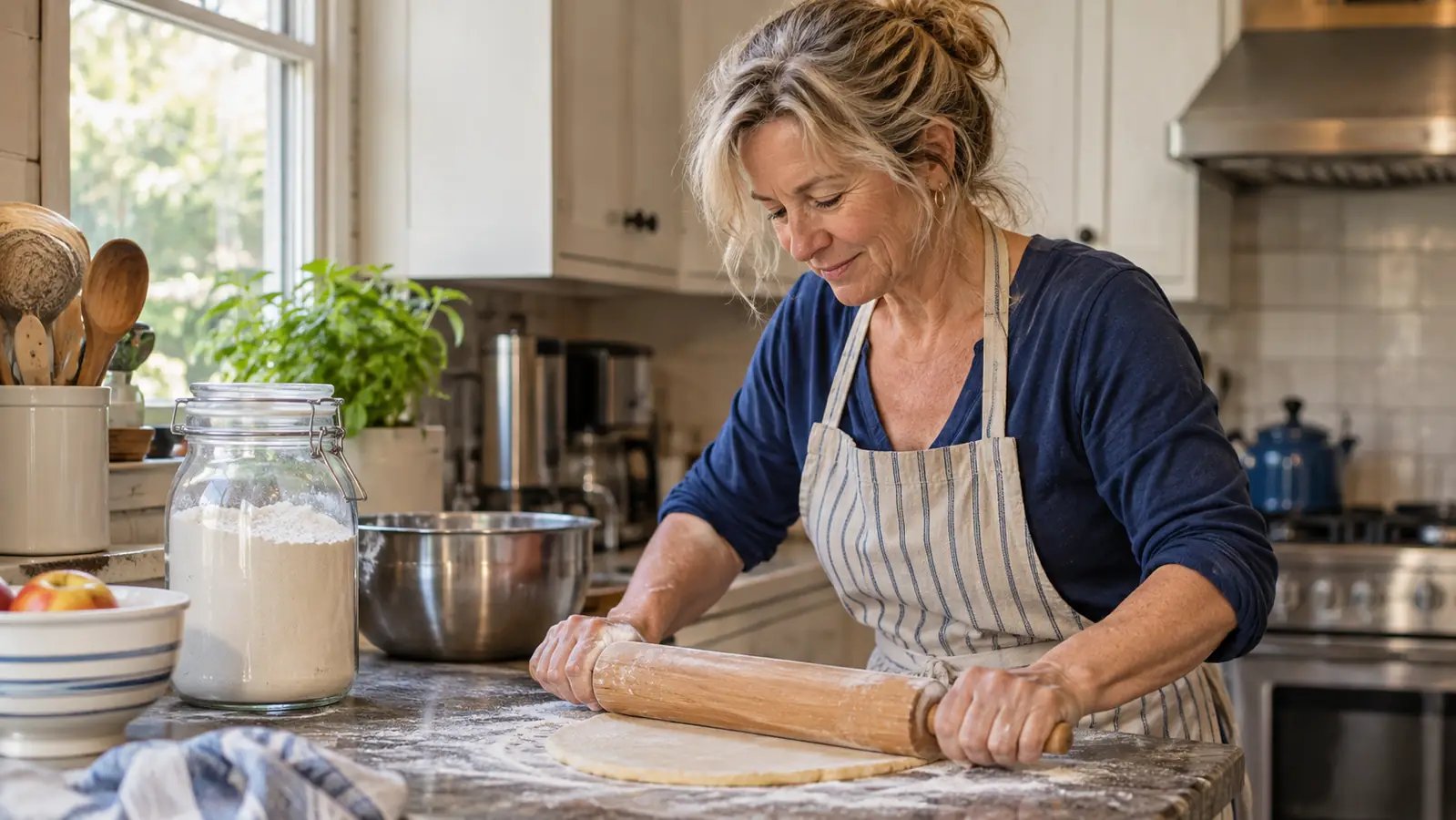
The first rolling pin I owned was short, light, and had a handle that cracked off in my hand after about three years. I rolled pie dough with a wine bottle for a while after that. Not because I was being resourceful. Because I was annoyed, and I did not want to buy another bad pin.
Ten months ago I bought the Farberware classic wood rolling pin. It is the 18-inch model with ergonomic handles, and it lives in the drawer under my oven. I have used it for apple pie at Thanksgiving, sugar cookie cutouts at Christmas, and a lot of ordinary weeknight hand pies. It has not cracked, warped, or given me a reason to reach for the wine bottle again. That is the short version. Here are ten reasons it stays.
The pin that retired my wine bottle
The Farberware classic wood rolling pin is 18 inches long, about a pound, and balanced end to end. It has ergonomic handles and a smooth hardwood surface that does not drag.
Amazon Check today's price on Amazon →It weighs about a pound, so the pin does some of the work
A rolling pin is a lever. If the pin is too light, you supply all the pressure with your wrists and shoulders, and the dough tells on you. The Farberware pin weighs about a pound. That is not heavy in the hand, but it is enough that gravity helps when I press down. I can roll a disk of pie dough from the center out with steady pressure instead of bearing down. My forearms notice the difference by the second crust.
The handles give you a place to push without gripping
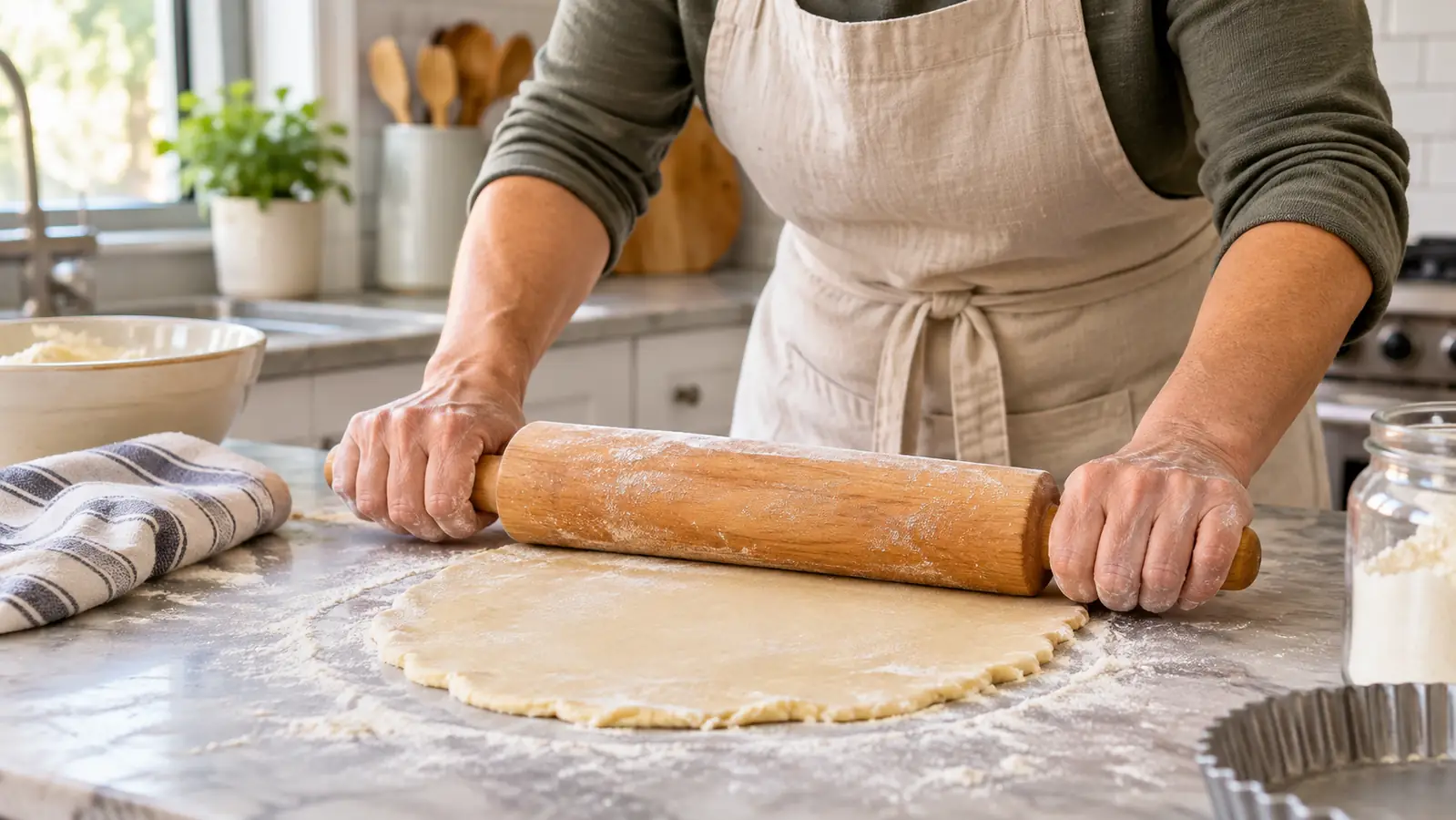
The handles on this pin are specially designed, and the difference is where your hands sit. I do not choke up on the pin or wrap my fingers around the wood. I hold the handles, push with the heels of my hands, and keep my wrists straight. Farberware says the handles reduce hand fatigue during extended sessions. I cannot measure fatigue, but I can tell you that after four pie crusts in a row my hands are tired, not sore. That is a fair distinction when you are baking for a church sale.
The surface is smooth hardwood that does not drag
The pin is built from moisture-resistant hardwood, and the surface is smooth enough that dough does not catch. Drag is the quiet problem with cheap pins. You roll forward, the dough sticks, and you either tear it or add so much flour that the crust turns tough. I dust the counter lightly, rub a little flour on the pin, and the Farberware rolls clean. The surface has stayed smooth after ten months of use. I wipe it with a damp cloth and let it dry standing on end, which is the whole care routine.
It is balanced end to end, so it rolls where you aim it
A pin that is heavy on one side will drift. You correct with your wrist, the dough gets an uneven thickness, and the next thing you know one side of the crust is thin enough to see through. The Farberware pin is balanced end to end. I noticed it most with large cookie cutouts, where I need an even sheet of dough. The pin goes where I push it. That sounds small until you have fought a pin that wants to go left while you want to go right.
It keeps my hands off the dough in a warm kitchen
Pie dough is mostly butter and flour, and butter wants to melt. My Baltimore kitchen is not hot, but it is small, and the oven is usually on. The less I handle the dough, the better the crust. A wooden pin lets me work from above with the handles instead of pressing my palms into the butter. I still chill the dough twice. I still work fast. But the pin helps me keep the dough cool enough to roll without a fight.
At about a pound and 18 inches long, the Farberware pin covers a full crust in fewer passes, and fewer passes mean less gluten development.
The 18-inch length covers a full pie crust in fewer passes
The Farberware pin is 18 inches long, which is wider than the crust I am rolling. That means I can roll from the center out and cover most of the dough in one pass, then turn the dough and repeat. Fewer passes mean less gluten development and less chance of the dough sticking. With a short pin, I end up doing lots of little pushes, and the crust shows it. For a standard pie, the length is the practical part I did not know I was missing.
It stores in the drawer under the oven, not on the counter
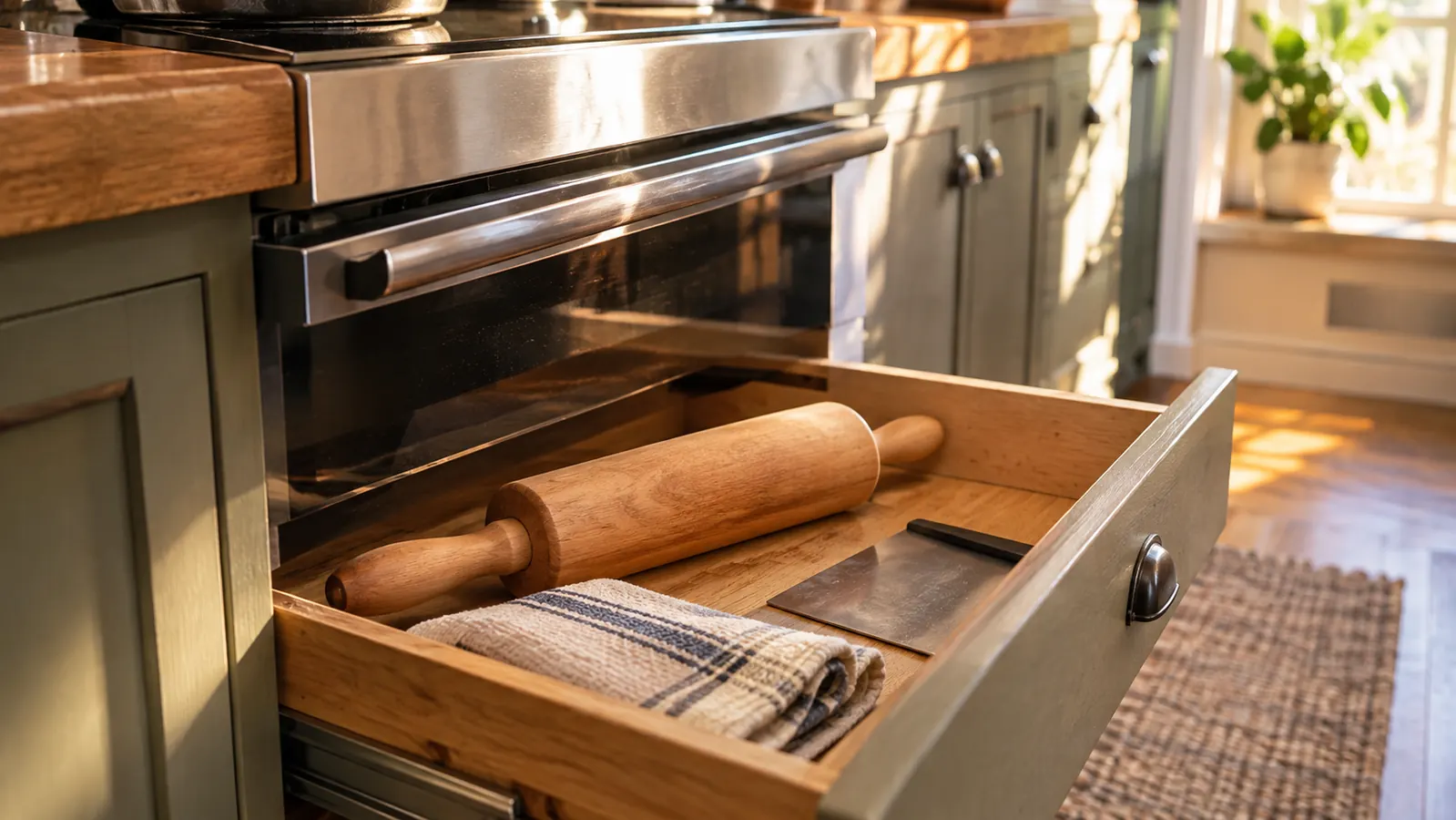
My kitchen has about six feet of counter and one pantry cabinet. I do not have room for a rolling pin to live on the counter, and I do not want it to. The Farberware pin is about 18 inches long, so it fits in the drawer under the oven with the sheet pans standing on edge nearby. I pull it out, use it, wipe it, and put it back. That sounds like a small thing. It is the reason the pin actually gets used instead of buried behind the stand mixer.
It handles cookie cutouts without stretching the dough
Sugar cookie cutouts at Christmas are a test of patience. You roll the dough, cut the shapes, reroll the scraps, and try not to work in too much flour. A heavy pin can press too hard and make the dough thin at the edges. This pin is about a pound, so I can use light pressure and still get an even sheet. I roll between two pieces of parchment when the dough is soft. The Farberware pin glides over the top piece without catching, and the cutouts keep their shape.
It works for hand pies, galettes, and small batches
I do not make pie only at Thanksgiving. I make hand pies when I have leftover filling, and galettes when the fruit on the counter is past its best. Those are small jobs, and a huge pin would be clumsy. The Farberware pin is long enough for a full crust and manageable for a small round. I can roll a six-inch disk without the pin feeling like a piece of lumber. That range is why it stays in the drawer instead of coming out once a year.
It is the pin I reach for without thinking
The best tool is the one you do not have to negotiate with. I do not check the Farberware pin for cracks before I use it. I do not wonder if the handle is loose. I do not think about the wine bottle. I take it out of the drawer, dust it with flour, and roll. Ten months in, that reliability is the whole point. A rolling pin should be boring. This one is boring in the way a good bench scraper or a reliable scale is boring. It just does the job.
What I'd Skip
I would skip the tapered French pin for a home kitchen like mine. I used French pins in the hotel pastry kitchen, and they are lovely when you roll a lot of dough on a big marble slab. At home, I have six feet of counter and a drawer. The tapered pin takes a different grip, and it offers less surface for a standard pie crust. I would also skip any pin that is too short, too light, or has handles that feel loose in the hand. Those are the pins that send people back to the wine bottle. The Farberware pin is not fancy. That is why I keep using it.
If your pin lives in a drawer, it should earn the space
The Farberware classic wood rolling pin is the one I keep under the oven: 18 inches, about a pound, balanced end to end, with handles that let me push instead of squeeze. It is plain, and that is the point.
Amazon Check today's price on Amazon →