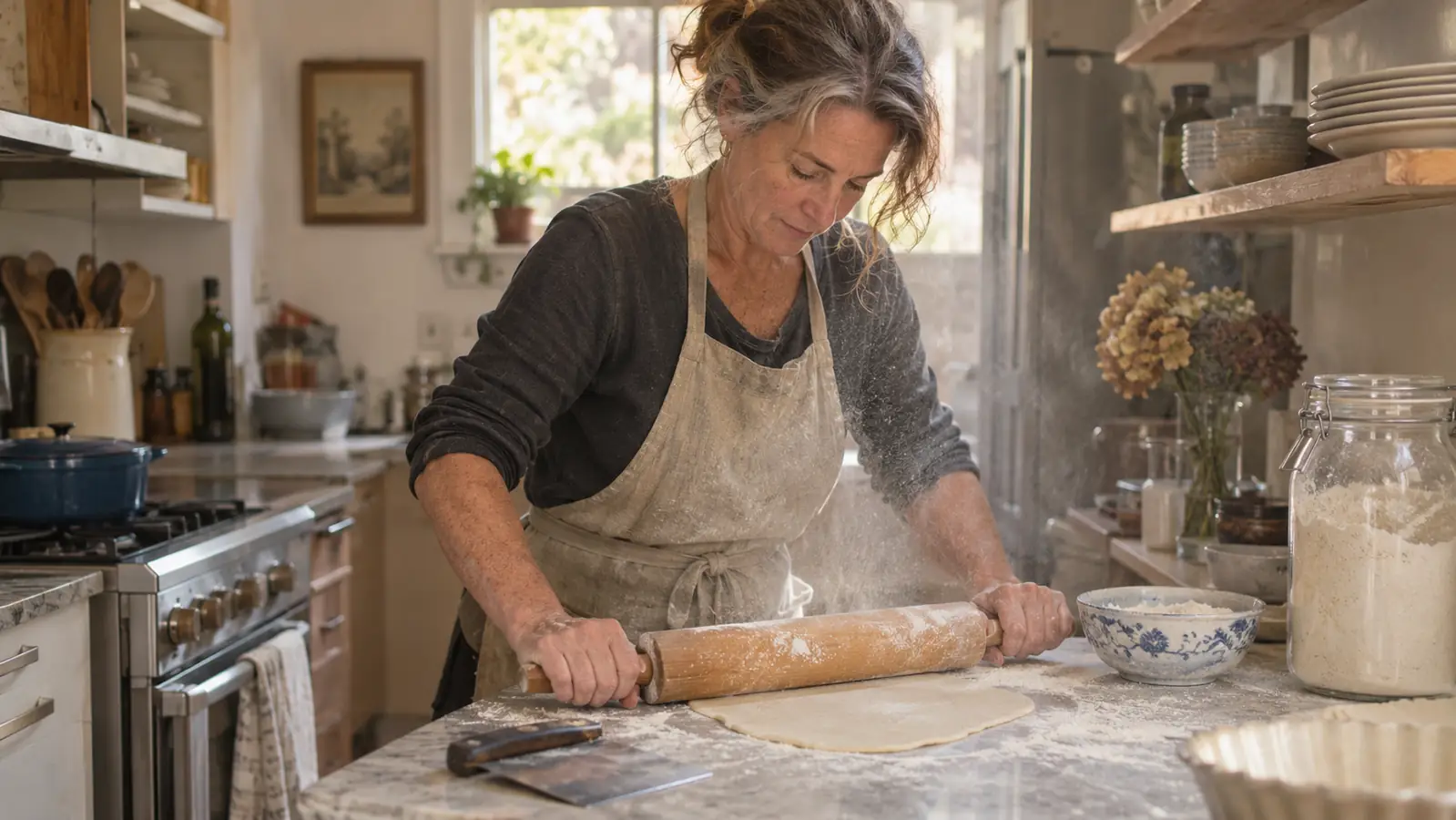
The drawer under my oven went about three years without a rolling pin in it. Not because I quit baking. I bake most weekends, and pie is the whole reason. The drawer was empty because I had gotten tired of buying the same bad pin twice, and I had not yet talked myself into buying a good one once.
The bad pin was a short one with a single handle, and it behaved exactly like what it was. One Thanksgiving, halfway through the crust for an apple pie, the handle cracked at the joint and the barrel came loose in my hands. I finished that crust holding the thing together like a broken umbrella. The next week it went in the trash.
What replaced it was a wine bottle. I had picked up a Farberware pin in a shop twice that year and put it back both times, because it seemed like more pin than I needed. So for three years I rolled pie dough with a bottle, and I want to be honest about what that actually does. A bottle is glass, so it is heavy in a way that helps. But the neck tapers, the body curves, and your hands warm the glass as you work.
So ten months ago I bought the Farberware classic wood rolling pin, and I want to be specific about why. It is sold as an 18-inch pin, and the barrel measures about 17.5 inches long and 2.5 inches across, which suits the six feet of counter I have in a Baltimore rowhouse kitchen. It weighs about a pound. The wood is hardwood, described by the maker as moisture-resistant, which matters in a kitchen where the counters get wiped down twice a day.
The first thing I rolled with it was a single crust for a quiche, on a Tuesday, with nobody watching. The pin sat level from end to end, and that sounds like a small thing until you have spent three years with a bottle. A pin that stays level means the dough is the same thickness at the far edge as it is under your hands. I lifted the round with the bench scraper, laid it in the tin, and for the first time in years I did not have to patch a thin spot.
A pin that stays level end to end does more for an even crust than any technique I could teach you.
Ten months on, it is still the only pin in that drawer
A hardwood barrel, balanced end to end, about a pound in the hand. This is the pin that has handled pie crust, cookie cutouts and hand pies since the bottle retired, and nothing on it has loosened or cracked.
Amazon Check Today's Price on Amazon →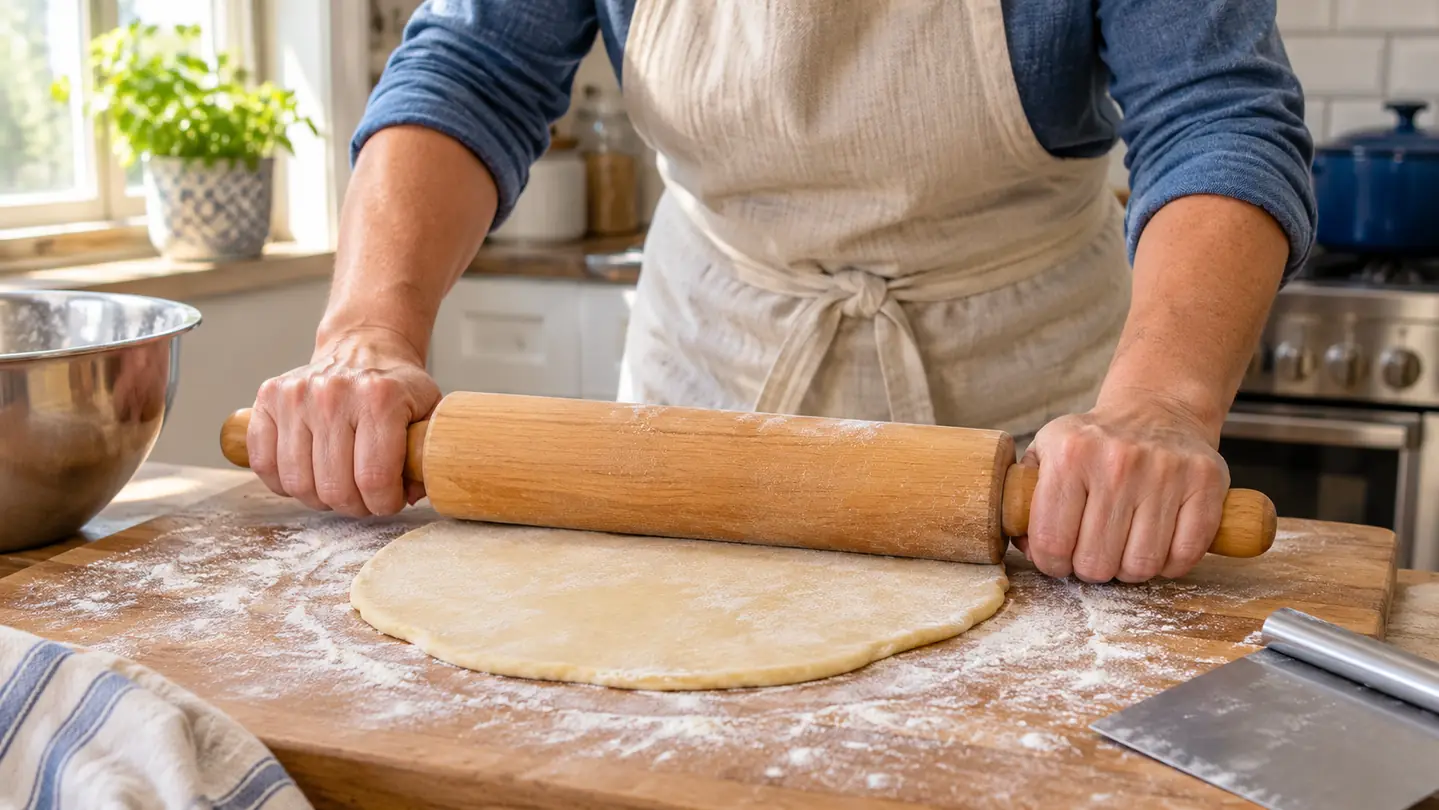
What Ten Months Actually Taught Me
I rolled a lot of dough in that stretch. Pie crust for Thanksgiving, sugar cookie cutouts in December, hand pies with the last of the apples in January. The first thing I noticed was where my hands sit. They sit on the handles at each end rather than on the barrel, so I am not warming the dough as I work and I am not pressing my palms into the middle of the round. After an hour of cutouts my wrists are tired but not sore, which was not true with the old pin.
The second thing was the weight. At about a pound, the pin does some of the pressing for you. In the hotel pastry kitchen I used French tapered pins, which you drive from the middle outward and steer with the heels of your hands. Those pins teach you control, and I am glad I learned on one. This pin asks less of you. For pie crust and cutouts at home on a Saturday, less is exactly what I want.
It has limits, and they are worth knowing before you buy. It is a straight pin, so it does not taper, and that means the French technique of rolling from the center out and letting the taper do the work is not available to you. It also takes up a full 18 inches of drawer, and in a galley kitchen that is real estate. Measure your drawer first. And because it is wood, I wipe it and put it away dry rather than leaving it in the sink with the dishes.
What it did not do was make my pie crust better on its own. Weighing flour on the scale did that, along with butter that goes back in the fridge every few minutes and dough that rests at least half an hour before it meets the pin. The pin simply stopped getting in the way, and that is the most I ask of any tool in that drawer.
What I'd Tell You If We Were Sitting at My Kitchen Table
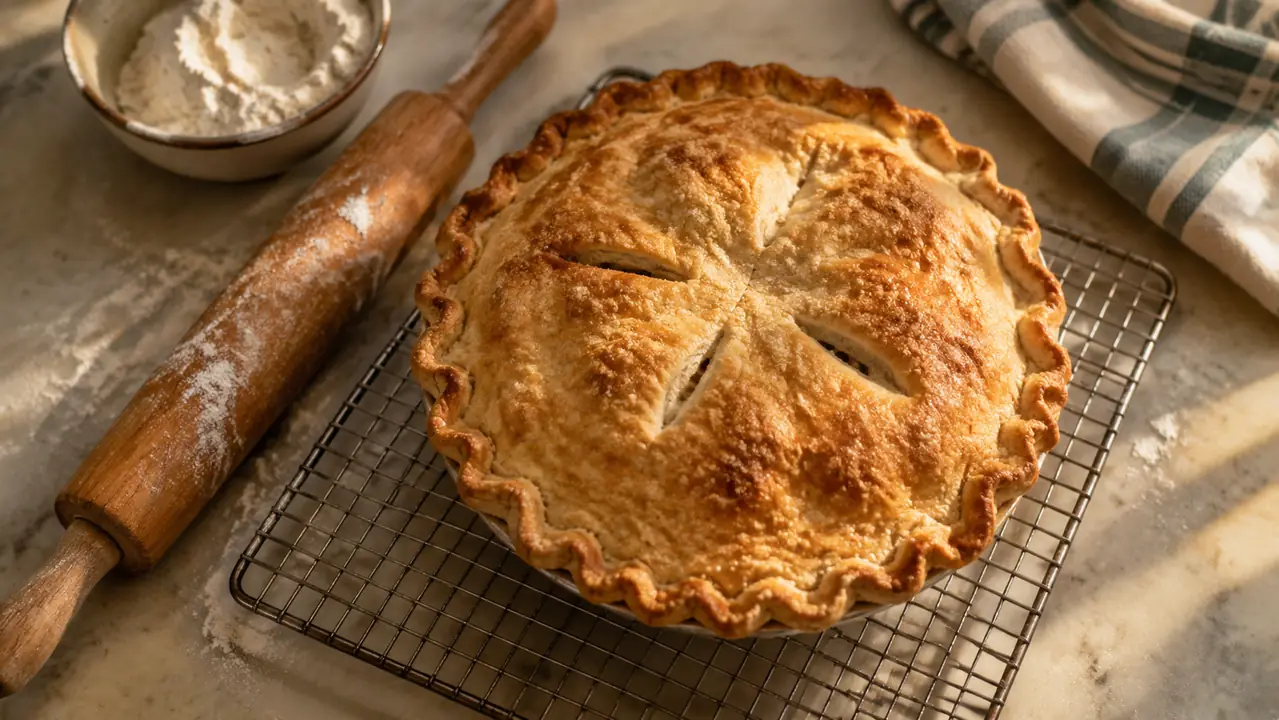
I would tell you the rolling pin is the last thing to spend on and the first thing to stop fighting. Most of the bad pastry I made in my twenties was bad because I was guessing at flour and rushing cold dough, not because of what I rolled it with. Fix the measuring and the chilling first. Then, when you are tired of patching thin spots, buy one pin and be done with it. The Farberware pin is the one I would slide across the table to you, because it is balanced, it is heavy enough to help, and after ten months of near weekly use it has not given me a single reason to look at anything else. If your drawer is short or you want to learn the tapered technique, read the comparison notes instead and go your own way. That is a real choice and not a wrong one.
The quietest tool in the drawer is the one you stop thinking about
For pie, cutouts and hand pies, this is the pin that stayed. No cracked handle, no spinning bottle, no patching thin spots at the last minute.
Amazon See the Farberware Rolling Pin on Amazon →